Candlelight, Cellar Checks and a Borrowed Generator: How The Sun Inn Keeps the Door Open When the Grid Doesn't
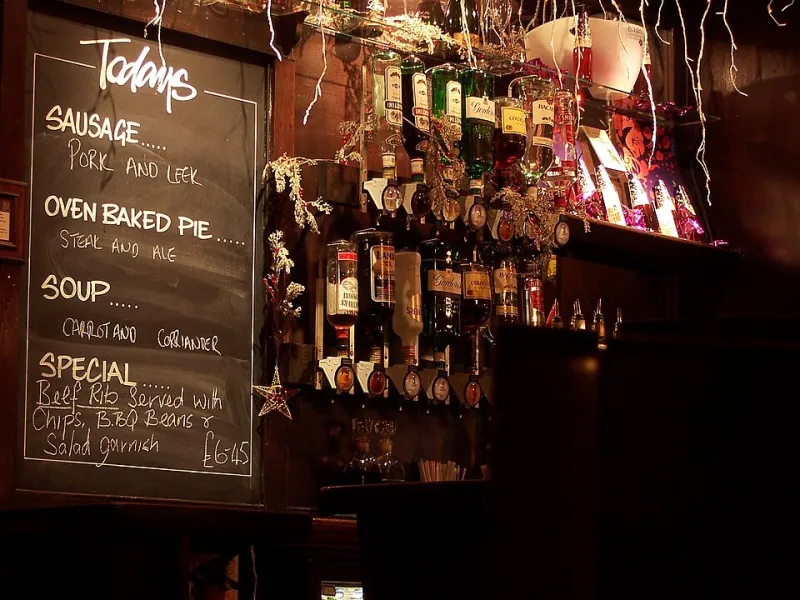
Photo: Ollecram1974 at Italian Wikipedia, Public domain, via Wikimedia Commons
The first thing that goes is the hum. You don't notice it for a minute or two — the fridges, the cellar cooler, the extractor over the fryers, that low mechanical drone you've tuned out since opening. Then someone says "has the power gone?" and everyone listens to the silence and realises, yes, it rather has.
Out here, that happens a handful of times each winter. A line comes down in the wind, a transformer sulks, a tree near the lane does something dramatic. It's rarely a disaster. It's rarely even a surprise. But it does mean the pub has to make a decision quickly: close, or carry on?
Nine times out of ten, we carry on.
The torch by the back door isn't decorative
There's a long-standing rule at The Sun Inn that anything needed in an emergency lives where you can find it in the dark. Sounds obvious. Isn't. The torch by the back door is checked weekly, the spare batteries sit in a tin on the shelf above the coats, and there's a second torch in the cellar because the cellar is the one room you genuinely do not want to fumble around in.
We keep a small gas burner on hand, along with a kettle that doesn't need a plug and a stack of candles in the drawer that also holds the beer mats. None of it is glamorous. All of it has been used.
The first job when the lights go out isn't lighting candles, though. It's checking the cellar.
Cellar first, everything else second
Beer doesn't like surprises. Temperature swings, a cooler that's stopped, a cellar that suddenly warms up — that's how you lose a keg's worth of good ale and a Saturday's takings in one go. So the routine is: torch, stairs, thermometer, doors kept shut. If the outage looks short, we simply sit tight and keep the cellar sealed. If it's stretching into hours, we start thinking about moving stock, ringing round for a generator, and being honest with ourselves about what can be saved and what can't.
There's a certain grim comedy to standing in a dark cellar at four in the afternoon with a torch in your teeth, but it's the least romantic and most important part of the whole thing. A pub that loses its beer loses its reason for being open.
The menu gets shorter, and nobody minds
When the power's off, the fryers are off, the extractor's off, and half the kitchen's equipment becomes expensive furniture. What we can do is cook on gas, serve cold things that were already cold, and lean on whatever's ready. So the blackboard gets wiped and rewritten in a hurry: soup, bread, cheese, pickles, a pie if it was already made, cake from the morning. Ham. Chutney. Whatever's in the cold store and safe to serve.
And here's the thing — people rather like it. There's something about a short, handwritten, slightly improvised menu that feels more honest than the usual list. You're not ordering from a laminated sheet. You're eating what the kitchen could manage, which on a dark afternoon in November is exactly the right sort of meal.
Candles, conversation, and the neighbours who know where the keys are
Once the food's sorted, the pub does what it's always done: it fills with people who'd rather be here than at home with no heating. Candles go on the tables. Someone finds a wind-up radio. The fire gets a bit more attention than usual. Conversation gets louder, because there's nothing to compete with and no screens to hide behind.
We're lucky with our neighbours. There's a rota of people in the village who know where the spare key lives, who has a generator, who's got a wood-burning stove going and a spare chair, and who might need checking on. The pub becomes a sort of unofficial coordination point — not because anyone appointed us, but because it's the building everyone passes and the one place with a big enough kettle.
If the outage runs late, we've been known to walk a flask of soup up the lane to someone who shouldn't be coping alone. That isn't a policy. It's just what happens when you know your neighbours' names.
The quiet logistics nobody writes about
What people don't see is the admin. Ringing the brewery to explain the delivery might not happen. Checking the card machine is working, because cash is king in an outage and we always keep a float. Making sure the staff who are due in know what's happening. Writing down what time the power went off, for the insurance, in a notebook that lives behind the bar.
Then there's the clean-up after — restocking, re-chalking the board, resetting every clock in the building, and checking the cellar one more time before bed. The romance of candlelight is real. The morning after is mostly mopping.
Why we bother
It would be easier to put a sign on the door and go home. Nobody would blame us. But a country pub in winter is a bit of infrastructure in its own right — somewhere warm, somewhere lit, somewhere with a phone charger and a plate of something. In Winforton, that matters more than a full menu or a perfect pint.
So when the lights go out, we light the candles, shorten the menu, check the cellar, and open the door. The hum comes back eventually. Until it does, you're very welcome to sit by the fire.