Christmas Starts in November Here — And No, We're Not Sorry
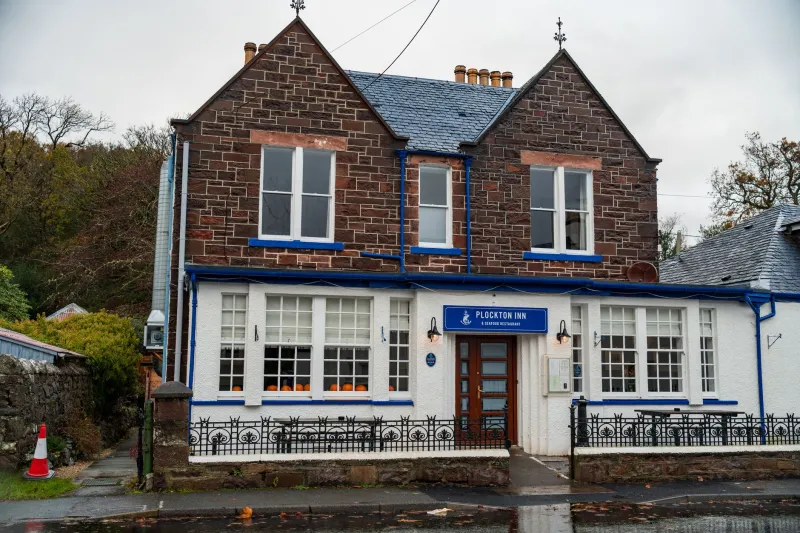
Every November, somewhere between the first hard frost and the last of the leaves letting go of the hedge, a customer leans on the bar, spots the corner of the blackboard where the festive menu has appeared, and says the same word. Already?
Yes. Already. And we'd like to make the case — politely, with a pint in hand — that this is not greed, not a marketing gimmick, and not some quiet betrayal of autumn. It is a practical, unglamorous piece of countryside hospitality that makes December work at all.
The complaint assumes Christmas is one day
Most objections to the early festive menu rest on a picture of Christmas as a single Thursday: one table, one bird, one long sleep afterwards. Lovely, but it isn't what lands in a pub diary.
For us, December is roughly four weekends of Saturdays, a scattering of Fridays, a run of midweek works lunches, a handful of family gatherings timed to dodge the actual day, and the small parties of neighbours who'd rather eat together in Winforton than drive to Hereford in the dark. Add the Boxing Day crowd and the walkers between Christmas and New Year, and the festive season is not a date — it's a month-long shift.
You cannot serve a month of bookings by deciding on the turkey in the second week of December. So the menu goes up in mid-November, and the bookings start filling the diary while there's still mud on everyone's boots from the last walk.
What a festive booking actually asks of a kitchen
Ordering a Christmas menu is not like ordering a curry on a Tuesday. Numbers have to be firm, weights have to be chosen, and the whole thing has to be staggered across a kitchen that still has an everyday menu to cook.
Our turkeys come from a farm over towards the Wye, and the conversation about sizes and collection happens long before anyone's thought about tinsel. We ask for pre-orders on the mains not to be awkward, but because a kitchen that knows it's cooking fourteen turkey and nine vegetarian on a given Saturday can roast properly rather than guess. Deposits do the same job: they turn a hopeful note in the book into a real table.
Starting the festive menu in mid-November also means the early bookings get the dates they actually want. The second and third Saturdays of December are gone fastest. The last week of November is quieter, cheaper to staff, and — whisper it — a far nicer way to eat a roast dinner than shoulder to shoulder with the works do.
The trimmings are where it lives or dies
Anyone can cook a bird. The reputation of a Christmas plate is decided by the supporting cast: roast potatoes with enough fat and enough room in the tin, pigs in blankets that were made here rather than bought in a bag, gravy that started with bones rather than a jug, red cabbage with a bit of vinegar about it, and bread sauce made with actual bread.
We are stubborn about a few things and relaxed about others. Sprouts get a hard sear and a little bacon — or butter and chestnut for the vegetarians — because a grey sprout is the fastest way to make a good lunch feel like a school hall. Stuffing is savoury, herby and not a bread pudding in disguise. Cranberry sauce is sharp, not sweet enough to double as jam.
And yes, there is a Christmas pudding, and there is a sticky toffee for the people who quietly hate Christmas pudding. Both are correct.
The vegetarian option is not a courtesy
If you've ever been handed a nut roast that was clearly made in a batch in October and reheated with an apologetic expression, you'll understand why this matters to us.
Our festive vegetarian main is built as a dish in its own right — a proper mushroom and chestnut wellington, or a squash and celeriac construction when the market leans that way, with the same trimmings everyone else gets and a gravy made without a drop of meat stock. It's ordered in similar numbers to the turkey on some nights, which tells you something about who's booking tables in Herefordshire in 2026.
Dietary notes get written on the booking, not discovered at the table. It's a small thing. It's the difference between a guest and an afterthought.
How we stop December becoming one long identical plate
Here's the real risk of a festive menu, and it has nothing to do with November. The risk is boredom — for the kitchen, and for anyone who eats here twice in December.
So the festive menu sits alongside the everyday board rather than replacing it. If you want the pie on the 12th, have the pie. The specials board keeps moving through the month, using whatever the growers and the game dealer are actually sending: roots, greens, a bit of venison, a fish dish when the weather allows. Puddings get a guest or two. The nut roast never appears twice in a fortnight.
We also keep a shorter lunch offering through December, because not every table wants three courses at noon, and a party of six should not be forced into a format that suits nobody.
Tradition is a habit, not a rule
There's a fondness in this country for pretending that festive food must arrive at a precise moment, like the first cuckoo. In practice, Christmas eating has always been elastic — goose one year, beef the next, ham on the sideboard, whatever the garden gave you. What makes it feel traditional is repetition and company, not the date on the calendar.
So when the menu goes up in mid-November, it isn't us rushing the season. It's us giving the season enough room to happen properly: turkeys ordered in good time, tables held for the people who need them, vegetables bought from people we know, and a kitchen that isn't improvising on the busiest Saturday of the year.
Come in, look at the board, and if you'd rather have the pie, have the pie. We'll be here either way — and the sprouts will be ready when you are.