Six O'Clock on a Friday: The Fish Night That Sets the Village Clock
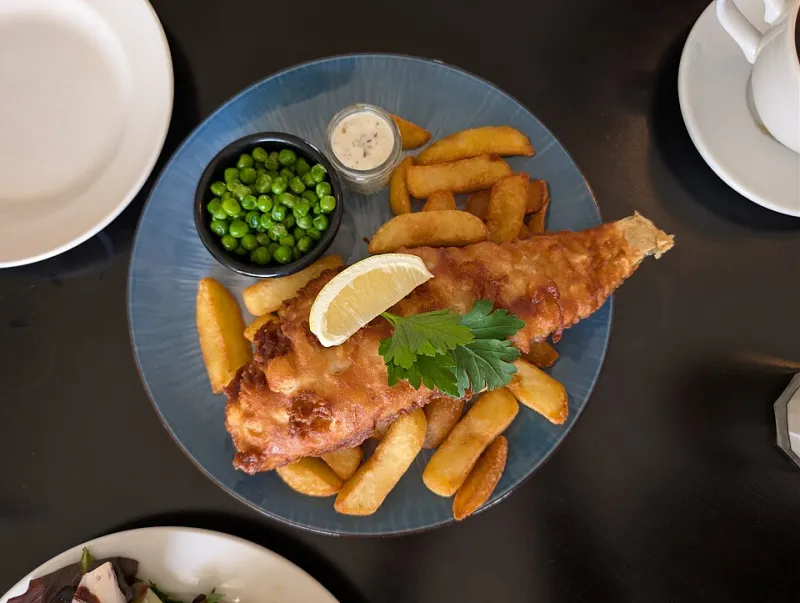
Photo: Andy Li, CC0, via Wikimedia Commons
By ten past six on a Friday, you can tell how the week has gone. If the village has had a good one, the bar is loud and the pass is stacked. If it has had a hard one, people still come — they just talk a bit less until the first plate lands. Either way, they come. Fish night has become the thing that happens, whether or not anybody planned it that way.
The queue that is not really a queue
There are two rushes on a Friday. The first arrives around half five, on the way home from work, and wants to be out again by seven. The second drifts in later, often with children or grandparents in tow, and settles in. Between the two there is a strange, busy calm in the kitchen, when the fryer is at temperature and everything is prepped and the only sound is the extractor fan doing its job.
On the busiest Fridays we get a genuine queue of order tickets at the pass — six or seven at once, clipped up in a row. The kitchen likes that. It is easier to cook twelve fish well than to cook one fish beautifully and then another one twenty minutes later. Batch cooking gets a bad reputation, but a fryer is a batch tool, and pretending otherwise is how you end up with soggy batter.
On the batter
We keep it simple because simple is harder to hide behind. Plain flour, a little cornflour for snap, a pinch of salt, a raising agent, and something cold and fizzy to bring it together — very often a light local ale, sometimes just sparkling water when we want the fish to speak for itself. It is mixed to order, not in advance, and it is used within the hour. Batter that sits goes slack and grey, and no amount of hot oil rescues it.
The oil matters as much as the mix. It needs to be hot enough to set the crust instantly but not so hot that the fish is raw at the centre when the outside is the colour of a good brick. We test with a drip of batter every single time. It is a thirty-second job that saves a whole service.
Where the fish comes from
This is the part where a country pub has to be honest. We are in Herefordshire, a long way from any harbour, and anybody claiming their haddock was landed that morning by a man they know personally is telling you a story. What we can do is buy properly: through a wholesaler we trust, on a schedule we can rely on, choosing haddock and cod from well-managed stocks, and refusing anything that arrives looking tired.
It arrives chilled, in boxes, on a Tuesday and a Friday. The kitchen checks it, smells it, and if it is not right, it goes back and we change the plan. Frozen-at-sea fish is not a dirty word either — for a pub doing a high-volume Friday, it is often a better guarantee of quality than fish that has spent four days on the road.
Chips, peas and the rest
A fish supper lives or dies on the chips. Ours are made from proper potatoes, cut thick, cooked twice — once gently to cook them through, once hard to colour and crisp them. They are salted the second they come out. Mushy peas are made in-house and left a bit chunky, because the smooth version tastes like something from a tin. Tartare is sharp with capers and gherkin. There is always a lemon wedge, and there is always malt vinegar on the table, and if you ask for gravy we will not look at you oddly.
Why it is not about nostalgia
It would be easy to write about Friday fish as a wistful thing — a remnant of a Britain of paper wrappers and bus queues. That is not really what is happening here. Most of the people eating fish at The Sun Inn on a Friday were not doing it in 1974. They are doing it now, in 2026, because it is a fixed point.
Weeks are shapeless things in a village. Work bleeds into evening, evenings bleed into weekends, and in the winter it is dark by half four and nobody is quite sure what day it is. A weekly special gives the week a spine. It answers the question of what is for tea without anyone having to have an argument about it. It gives people a reason to ring each other on a Wednesday and say, are we doing Friday.
That is worth more than a clever menu. Plenty of pubs can do a good plate of food. Fewer can promise that the same plate will be there, done the same way, at the same time, every week, for years. Consistency is deeply unglamorous and quietly the whole point.
The last plate of the night
Around nine, the fryer gets switched off. The last ticket comes down, the oil gets filtered, and somebody eats the final, slightly-too-small piece of fish standing up in the kitchen because it would be a shame to waste it. The bar fills up again with people who have already eaten and are not quite ready to go home.
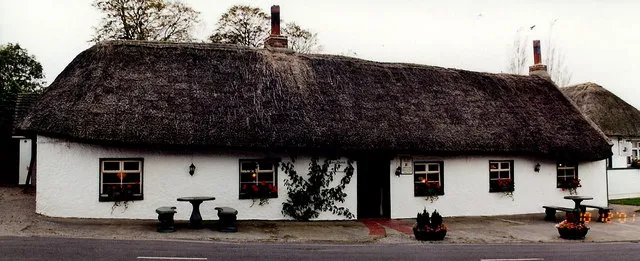
That is Friday in Winforton. Not a festival, not an event, not something you need to book months ahead for. Just a dependable marker in the week, and a very good reason to be somewhere warm when the dark comes down.